

OBD-II Code P0133: Oxygen Sensor Slow Response
What P0133 means, why it triggers, and how to fix it
- A failing Bank 1, Sensor 1 oxygen sensor causes 70% of P0133 codes, but exhaust leaks are a frequent secondary culprit.
- Driving with an active P0133 code drops fuel economy by 5-10% and destroys your catalytic converter within 6-12 months, leading to a $1,500+ repair.
- Inspect the exhaust manifold for cracks and the sensor wiring for melted insulation before buying parts to avoid a $200 misdiagnosis.
- Fix P0133 before addressing a paired P0420 code, as a slow oxygen sensor provides invalid data that falsely triggers catalytic converter failure codes.
- Check for Technical Service Bulletins (TSBs) on 2018+ Jeep and Ford models, as a dealership PCM software update is often the only required fix.
What Does P0133 Mean?
Code P0133 indicates the Engine Control Module (ECM) detects a slow response from the upstream oxygen sensor on engine Bank 1. This sensor measures exhaust oxygen levels to optimize engine efficiency. A slow sensor prevents the computer from adjusting the air-fuel mixture quickly enough, wasting fuel and increasing emissions.
Technical definition: The SAE definition is "O2 Sensor Circuit Slow Response (Bank 1, Sensor 1)". The powertrain control module (PCM) triggers this when the upstream oxygen sensor takes too long to switch between rich (high voltage) and lean (low voltage) states. A healthy sensor switches in under 100 milliseconds; P0133 sets when this transition exceeds manufacturer limits.
Can I Drive With P0133?
Yes, But With Caution. You can drive with this code temporarily. Ignoring it decreases fuel economy by 5-10% and destroys your catalytic converter within months. Replacing a ruined catalytic converter costs $1,200 to $2,800.
Common Causes
- Failing or Contaminated Oxygen (O2) Sensor (Very Common) — The O2 sensor's sensing element degrades over time or becomes contaminated with carbon, oil, coolant, or silicone. This buildup clogs the internal element, slowing its reaction to exhaust gas changes.
- Exhaust System Leaks (Common) — Cracks in the exhaust manifold, flex pipe, or gaskets before the O2 sensor introduce outside air into the exhaust stream. This unmetered oxygen skews the sensor's readings, causing a slow response as it interprets an artificially lean condition.
- Malfunctioning O2 Sensor Heater Circuit (Common) — The oxygen sensor requires temperatures around 600°F (315°C) to function. A failed internal heater circuit leaves the sensor cold during startup, causing a slow response and triggering the code.
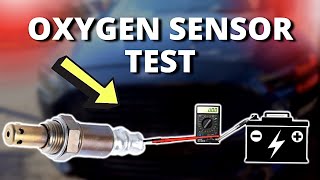
- Damaged Wiring or Poor Connections (Common) — Exposed undercarriage wiring frays, corrodes, or melts against the exhaust. Increased circuit resistance (above 0.5 Ω) dampens the voltage signal 🎬 Watch: How to test an oxygen sensor with a multimeter., making the sensor appear slow to the PCM.
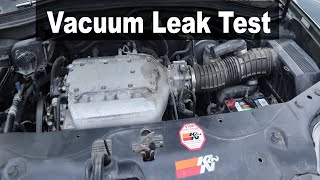
- Engine Vacuum Leaks (Less Common) — Leaks in vacuum hoses, intake manifold gaskets, or the PCV valve allow unmetered air into the engine. This leans out the air-fuel mixture, forcing the O2 sensor to respond slowly to the erratic exhaust flow.
- Dirty or Failing Mass Airflow (MAF) Sensor (Less Common) — A contaminated MAF sensor under-reports incoming air. The PCM calculates an incorrect fuel mixture, and the O2 sensor registers a slow response while attempting to compensate.
- PCM Software Issues (Less Common) — Overly sensitive PCM software on specific Jeep and Ford models triggers false P0133 codes. A dealership software update resolves this glitch without replacing parts.
- Low Fuel Pressure or Fuel System Issues (Less Common) — A weak fuel pump, clogged filter, or leaking injectors create incorrect fuel pressure. The resulting improper air-fuel ratio causes the O2 sensor to react slowly to the inconsistent mixture.
- Contaminated Fuel (Rare) — Low-quality fuel or improper additives (like E85 in a non-flex-fuel vehicle) alter combustion. The abnormal exhaust gas fouls the O2 sensor or causes readings interpreted as a slow response.
- Failing Engine Coolant Temperature (ECT) Sensor (Rare) — A faulty ECT sensor falsely reports a cold engine, forcing the ECU to maintain a rich warm-up fuel mixture. This constant rich condition slows the O2 sensor's response.
Symptoms
- Worse Gas Mileage — The incorrect air-fuel mixture burns excess fuel, dropping fuel economy by 5-10%.
- Rough Idle or Engine Hesitation — The engine idles roughly or hesitates during acceleration due to the imbalanced air-fuel ratio.
- Failed Emissions Test — The vehicle produces excess pollutants and automatically fails state emissions inspections due to the active Check Engine Light.
- Engine Misfires — An unstable air-fuel ratio causes incomplete combustion, leading to engine misfires under load.
- Black Smoke from Exhaust — An overly rich fuel mixture dumps unburned fuel into the exhaust, exiting the tailpipe as black smoke.
- Rotten Egg Smell from Exhaust — A rich condition overloads and overheats the catalytic converter, producing a sulfur-like rotten egg smell.
- Check Engine Light is On (also visible on scanner) — Illuminates immediately when the PCM logs the P0133 fault.
Diagnostic Flowchart
Tap your situation to follow the diagnostic path that matches what you're seeing on this code.
Common Fixes & Costs
- Replace Bank 1, Sensor 1 Oxygen Sensor — Parts: $50-$200, Labor: $100-$250, ~0.8 hr book time (DIY)
- Repair Exhaust Leak — Parts: $30-$150, Labor: $150-$600, ~2.5 hr book time (Professional)
- Repair Damaged Wiring or Connectors — Parts: $10-$50, Labor: $100-$300, ~1.5 hr book time (Intermediate)
- Clean or Replace Mass Airflow (MAF) Sensor — Parts: $10-$300, Labor: $50-$150, ~0.5 hr book time (DIY)
- Update/Reprogram PCM — Parts: $0, Labor: $150-$300, ~1.0 hr book time (Professional)
Used vs. New Parts: Buying Guide
When a used part is worth it: Never buy a used oxygen sensor. It is a wear item with a finite lifespan; a used sensor will likely fail shortly after installation, wasting labor and money.
Donor-vehicle mileage cap: roughly under 20000 miles for the part to have meaningful remaining life.
Donor quality checklist:
- Avoid sensors from high-mileage vehicles or regions using road salt.
- Visual inspection cannot determine a used O2 sensor's remaining life.
- A new aftermarket sensor is always a better choice than a used OEM sensor.
Decision logic:
- If The part is an Oxygen (O2) Sensor → Always buy new. The risk of premature failure with a used sensor is too high.
- If A new OEM sensor is too expensive → Purchase a reputable aftermarket brand (e.g., Denso, Bosch, NTK) over a used part.
Warranty tradeoff: Used O2 sensors carry no warranty. New aftermarket sensors include a 1-year to limited lifetime warranty.
Worst-case if a used part fails: $150-$300
What Happens If You Wait — Timeline
- 0-2 weeks: Check Engine Light illuminates with code P0133. No other symptoms are noticeable. The ECU begins making minor, inefficient fuel trim adjustments. (MPG impact: 0-5%% · Added cost: $0-25 in wasted fuel)
- 2 weeks - 3 months: A consistent 5-10% drop in fuel economy occurs. The engine exhibits a rough idle when cold, and hesitation during acceleration becomes apparent. (MPG impact: 5-10%% · Added cost: $50-150 in wasted fuel)
- 3-8 months: The engine runs consistently rich, causing the catalytic converter to operate above its design limit. The internal ceramic substrate begins to crack or coat with soot. A faint 'rotten egg' smell appears. (MPG impact: 10-15%% · Added cost: $400-900 (early stage catalytic converter damage begins))
- 8+ months: Complete catalytic converter failure. The substrate melts down, creating an exhaust blockage. This leads to severe loss of power, stalling, and possible engine damage. (MPG impact: 15-25%+% · Added cost: $1500-3000+ (for catalytic converter replacement))
Cost of Not Fixing It
- 0-1 Month: Fuel economy drops by 5-10%, increasing fuel costs. (Added cost: $20-$50)
- 1-6 Months: A persistent rich condition overheats and degrades the catalytic converter. (Added cost: $0)
- 6+ Months: The catalytic converter fails completely from prolonged exposure to unburned fuel, requiring professional replacement. (Added cost: $1200-$2800)
Diagnosis Steps
- Read the Codes and Review Freeze Frame Data
Use an OBD-II scanner to confirm P0133 is active. Review the 'Freeze Frame' data to see engine conditions (RPM, speed, temp) when the code set. Check for paired codes; P0171 (Lean) or P0172 (Rich) point to a root cause other than the sensor.
Tools: OBD-II Scanner (Beginner) - Analyze the O2 Sensor's Live Data Graph
Using an OBD-II scanner with live data graphing, watch the voltage for 'O2S11'. With the engine fully warmed up and at a steady 2000 RPM, the voltage graph must show a clean sine wave, fluctuating rapidly between 0.1 and 0.9 volts. A slow sensor displays a lazy, rounded waveform taking over 1 second to swing from high to low.
Tools: OBD-II Scanner with Live Data Graphing (Intermediate) - Visually Inspect the O2 Sensor and Wiring
Locate Bank 1, Sensor 1 before the catalytic converter. Inspect the wiring harness for melted plastic, frayed wires, or corrosion on the connector pins. Ensure the connector is plugged in securely.
Tools: Flashlight, Safety Glasses (Beginner) - Check for Exhaust Leaks
Start the engine cold. Listen and feel carefully for ticking or puffing sounds from the exhaust manifold and downpipe area. A manifold-to-engine-block gasket leak is common. Take the vehicle to a shop equipped with a smoke machine if DIY leak checks fail.
Tools: Mechanic's Stethoscope (optional), Smoke Machine (professional) (Intermediate) - Inspect for Vacuum Leaks
With the engine idling, listen for a hissing sound around the intake manifold, vacuum hoses, and PCV valve. Spray short bursts of brake cleaner near suspected leak areas; if the engine RPM changes, you found a leak.
Tools: Flashlight, Brake Cleaner or Propane Torch (Intermediate) - Test the O2 Sensor Heater Circuit
Disconnect the O2 sensor. Using a multimeter set to Ohms (Ω), measure the resistance between the two heater pins on the sensor side. A good heater shows low resistance, typically 2 to 30 Ohms at room temperature. Infinite resistance means the heater is dead and the sensor requires replacement.
Tools: Multimeter, Vehicle Wiring Diagram (Advanced) - Clean the Mass Airflow (MAF) Sensor
Remove the MAF sensor from the air intake tube. Spray the sensitive internal wires with a dedicated MAF sensor cleaner. Do not touch the wires. Let it dry completely before reinstalling.
Tools: Screwdriver/Ratchet Set, MAF Sensor Cleaner (Intermediate) - Perform a Forced Rich/Lean Test
With the live data graph running, force the engine lean by creating a small vacuum leak. The O2 sensor voltage must drop below 0.2V in under 100ms. Force the engine rich by feeding unlit propane into the intake. The voltage must spike above 0.8V in under 100ms. A slow reaction confirms a bad sensor.
Tools: OBD-II Scanner with Live Data, Propane Torch or Vacuum Hose (Advanced) - Test Fuel Pressure
Connect a fuel pressure gauge to the fuel rail's service port. With the key on, engine off (KOEO), pressure must meet the manufacturer's specification (typically 40-65 PSI). Start the engine; pressure must remain stable. Low or fluctuating pressure points to a failing fuel pump or regulator.
Tools: Fuel Pressure Gauge, Vehicle-Specific Service Manual (Advanced)
When This Code Triggers (Freeze-Frame Conditions)
- Engine Coolant Temp: 180-210°F (82-99°C) (Engine is fully warmed up and operating in closed-loop fuel control.)
- RPM: 1500-3000 (Steady cruise or light acceleration, not at idle or full throttle.)
- Engine Load: 20-65% (The engine is under a moderate, stable load, allowing the PCM to run the diagnostic test.)
- Vehicle Speed: 35-60 mph (Typically set during steady-state highway or city driving, not during stop-and-go traffic.)
Related Codes
- P0171 — Indicates 'System Too Lean (Bank 1)'. An exhaust or vacuum leak causes both P0133 and P0171. Fix the leak before suspecting the sensor.
- P0420 — Indicates 'Catalyst System Efficiency Below Threshold (Bank 1)'. A slow P0133 sensor provides bad data, making the computer mistakenly think the catalytic converter is failing. Always fix P0133 first.
- P0135 — Indicates 'O2 Sensor Heater Circuit Malfunction'. A failed heater causes the sensor to warm up too slowly, triggering the P0133 'Slow Response' code. The heater circuit is the root cause.
- P0134 — Indicates 'O2 Sensor Circuit No Activity Detected'. A slow sensor (P0133) produces a delayed signal, while a 'no activity' sensor (P0134) sends no signal at all due to a complete failure or broken wire.
Climate & Environmental Factors
- Cold Weather: Extreme cold slows the O2 sensor's warm-up time, even with a functional heater circuit. This triggers the P0133 code during the initial warm-up phase, especially on older vehicles.
- High Humidity / Road Salt: Salt and moisture degrade the O2 sensor's electrical connector and wiring, leading to high resistance. It also accelerates exhaust component rust, causing leaks that trigger the code.
- High Altitude: Lower oxygen density at high altitudes forces the air-fuel management system to adjust. This lower density contributes to conditions the PCM interprets as a slow sensor response during rapid engine load changes.
How to Talk to a Mechanic About This Code
Say this: "I have a P0133 code for a slow oxygen sensor response on Bank 1. I'd like to schedule a diagnostic to determine the root cause. I want to confirm if it's the sensor itself or an underlying issue like an exhaust leak or wiring problem before replacing any parts."
This frames the job as a diagnosis, not a blind parts replacement. It sets the expectation that you want proof of the failure before paying for a fix, discouraging a shop from simply swapping the sensor without investigation.
Avoid saying:
- 'My check engine light is on, can you just fix it?' (Invites a shop to start replacing parts without a proper diagnosis).
- 'I think I need a new oxygen sensor.' (Leads a shop to replace the sensor without checking for other causes, wasting money when the code returns).
- 'Just do whatever you think is best.' (Gives up your authority and leads to expensive, unnecessary repairs).
Questions to ask before authorizing the repair:
- Did you graph the live data from the O2 sensor? Can you show me how it's responding compared to specifications?
- Did you perform a smoke test to check for exhaust leaks ahead of the sensor?
- If you are recommending a new sensor, how did you rule out a wiring issue or a vacuum leak?
- Will you provide a written estimate with a full breakdown of parts and labor?
- What is the warranty on this specific repair, including both parts and labor?
Where to Take It: Dealer vs Independent vs Chain
- Dealer:
Recommended only if your vehicle is under warranty or has a known software-related TSB. Otherwise, an independent shop is more cost-effective.
Best for: Vehicles still under the federal emissions warranty (8 years/80,000 miles)., Vehicles with known TSBs for a P0133 software update (common on Jeep/Ford)., Complex electrical issues or when a PCM reprogramming is required.
Downsides: Highest labor rates and part costs., Defaults to replacing parts based on pattern failures rather than deep diagnosis. (Typical cost: +40% vs. baseline) - Independent Shop:
Best overall fit for most out-of-warranty vehicles. A good independent shop has the necessary tools (smoke machine, scan tool with live data) to diagnose P0133 correctly.
Best for: Out-of-warranty vehicles where cost is a factor., Diagnosing common codes like P0133, as experienced technicians frequently see the root causes (leaks, wiring)., Getting a second opinion on a costly dealership quote.
Downsides: Shop quality and diagnostic skill vary widely; vetting reputation and ASE certifications is crucial., Lacks access to the latest manufacturer-specific software for PCM updates. (Typical cost: +0% vs. baseline) - Chain Shop:
Use with caution. Acceptable if you are 100% certain only the O2 sensor needs replacement. AVOID for initial diagnosis of a P0133 code, as misdiagnosis is highly likely.
Best for: Simple, clear-cut part replacements after a definitive diagnosis has already been made elsewhere.
Downsides: Technician skill and diagnostic equipment are inconsistent., Business model incentivizes upselling (e.g., recommending a catalytic converter for a P0420 code triggered by P0133)., Not equipped for in-depth diagnostics like smoke testing or wiring repair. (Typical cost: -10% vs. baseline)
When to Walk Away From the Repair
If the estimated repair cost exceeds 50% of your car's private-party value, seriously consider not fixing it.
- Car worth $4000, fix is $2200: Walk away. The repair cost is over 50% of the car's value. You are likely to face other age-related repairs soon.
- Car worth $12000, fix is $800: Fix it. This repair is well below the threshold and is a reasonable cost to keep a more valuable car running properly.
- Car worth $2500, fix is $1400: Walk away. The repair cost is nearly 60% of the car's value. It's not a sound financial decision.
What Scan Tool You Need for This Code
Minimum: A scanner that reads and graphs live O2 sensor voltage data. Reading the P0133 code alone is insufficient for diagnosis.
A basic $20 code reader only confirms the P0133 code exists. It cannot show the live sensor waveform, which is essential to determine if the sensor is truly 'slow' or reacting to another problem.
Budget: BlueDriver Pro or similar Bluetooth dongle with app (~$100) — Connects to a smartphone and graphs the live voltage of the Bank 1 Sensor 1 O2 sensor. You watch its switching speed to confirm a slow response.
Mid-range: Foxwell NT510 Elite or Innova 5610 (~$180) — Offers live data graphing and access to Mode 6 test results for the O2 sensor monitor. Provides limited bidirectional controls to test the sensor's heater circuit directly.
Professional: Autel MaxiCOM MK808 or Launch CRP919 (~$500-800) — Provides full bidirectional control to run active tests, comprehensive live data with fast refresh rates, and access to manufacturer-specific codes to definitively isolate the fault.
Rent vs buy: Auto parts stores offer free code reading, but basic scanners lack live data graphing. Some offer a tool loaner program for advanced scanners. Renting is best for a one-time issue; buying a budget pick is worthwhile for regular DIY diagnostics.
How to Clear the Code After You Fix It
- Clear the P0133 code using an OBD-II scan tool.
- Complete a full OBD-II drive cycle to reset readiness monitors.
- Never disconnect the battery to clear the code; this resets readiness monitors without erasing permanent faults.
Drive cycle (~20 minutes): A generic drive cycle includes: 1) Cold start and idle for 2-3 minutes. 2) Drive in mixed city/highway conditions for 15-20 minutes, including steady cruising (e.g., 55 mph for 5 minutes) and stop-and-go. 3) Allow the vehicle to cool completely and repeat if monitors are not set.
Readiness monitors affected: Catalyst Monitor, O2 Sensor Monitor, O2 Sensor Heater Monitor
Before emissions retest: drive at least 50 miles to fully set monitors.
Watch out for:
- Clearing the code with a scanner and immediately going for an emissions test results in a 'Not Ready' failure.
- If the underlying cause (like an exhaust leak) remains unfixed, the code returns after the drive cycle completes.
Will This Fail Emissions / State Inspection?
Yes — this code typically fails an OBD-II emissions inspection.
- California: An active P0133 code causes an automatic smog check failure. All OBD-II readiness monitors must be 'Ready' to pass, requiring a full drive cycle after repair.
- New York: A vehicle automatically fails the emissions inspection if the Check Engine Light is on. The OBD-II system is scanned directly by the DMV's computer system.
- Texas: In the 17 counties requiring emissions testing, an active P0133 trouble code is an automatic failure. Readiness monitors must be set before a re-test.
Most Commonly Affected Vehicles
- Jeep Wrangler (JL) & Gladiator (JT) (2018-2025) — A PCM software update is a frequent fix for this code (TSB #23-019-25 REV. B). On 2021-2022 models, an oil leak from the Bank 1 valve cover gasket drips onto the O2 sensor, causing contamination.
- Ford F-150, Mustang, Ranger, Focus (2000-2024) — Exhaust leaks (especially cracked manifolds on Triton engines) and dirty MAF sensors are common culprits. Some 2023-2024 Super Duty trucks require a software fix via TSB.
- Chevrolet Silverado, Tahoe, Cobalt (2005-2013) — On GMT900 trucks (2007-2013), cracked exhaust manifolds are a known issue that introduces unmetered air and triggers this code.
- Toyota Corolla, Tacoma, Matrix (1995-2015) — On older models like the 1st Gen Tacoma (1995-2004), a cracked air intake tube causes lean conditions that trigger a P0133.
- Subaru Impreza, Outback, Forester (2005-2014) — These vehicles are highly sensitive to aftermarket sensors. Using non-OEM (e.g., Denso) sensors causes the P0133 code to return immediately.
- Honda Civic, Accord, Element (2006-2017) — Frequently traced back to a degraded upstream Air/Fuel ratio sensor. Using an OEM-specific sensor (Denso or NTK) is required to ensure a lasting fix.
- Hyundai Tucson, Elantra, Santa Fe (2002-2018) — Hidden exhaust leaks at the manifold or flex pipe are common root causes. A smoke test is required before replacing the sensor.
- BMW 3-Series (E90), 2-Series (F22) (2006-2016) — Triggered by aging sensors, exhaust leaks from a cracked valve cover, or sensor placement issues after installing aftermarket downpipes.
Manufacturer-Specific Notes
- Jeep: For 2018+ Wranglers and Gladiators, a PCM software update (TSB #23-019-25 REV. B) fixes false P0133 codes. Inspect the passenger side valve cover for oil leaks dripping onto the sensor.
- Ford: A contaminated MAF sensor or cracked exhaust manifold frequently makes a good O2 sensor appear slow. TSBs for 2011-2012 and 2023-2024 Super Duty trucks point to software updates.
- Subaru/Honda: These makes are highly sensitive to the brand of oxygen sensor used. Non-OEM sensors trigger a P0133 code even if new. Use a genuine OEM or OEM-equivalent (Denso, NTK) sensor.
- General Motors (Chevrolet/GMC): On V8 and V6 truck engines, cracked exhaust manifolds allow air to leak into the exhaust, triggering a P0133 code. This is accompanied by an exhaust ticking noise when cold.
- Federal Emissions Warranty: The oxygen sensor is covered under the Federal Emissions Performance and Design & Defect Warranties (typically 8 years/80,000 miles). Dealership repairs or PCM updates may be free within this window.
Real Owner Stories
2007 Dodge Charger 2.7L V6 with recurring P0133
Check Engine Light came on, causing a smog test failure. Slight acceleration lag was noticeable.
What they tried:
- Replaced the Bank 1, Sensor 1 O2 sensor twice, but the code returned each time.
Outcome: The issue remained unresolved, pointing to a root cause other than the sensor itself, such as an exhaust leak, wiring problem, or fuel system issue.
Lesson: If replacing the O2 sensor doesn't fix the code, stop replacing parts. Check for exhaust leaks, inspect the wiring harness, and test fuel pressure before buying another sensor.
2010 Chevrolet Tahoe with multiple O2 sensor codes
Vehicle had a new exhaust system installed. After 30k miles, O2 sensor codes appeared. A broken exhaust hanger created a small hole.
What they tried:
- Welded the exhaust hole.
- Replaced all four O2 sensors, temporarily clearing 29 related codes.
Outcome: The P0133 code returned shortly after repairs. The owner noted existing valve cover and oil pan gasket leaks.
Lesson: Persistent O2 sensor codes after fixing obvious exhaust leaks point to systemic issues. Oil leaking from gaskets contaminates new sensors, causing premature failure.
2005 Hyundai Tucson 4-cylinder with returning P0133
The P0133 code appeared. The owner replaced both oxygen sensors, clearing the light for 10 months.
What they tried:
- Replaced the upstream sensor again when the code returned.
- Cleaned the Mass Airflow (MAF) sensor.
- Replaced the air filter and inspected for vacuum leaks.
Outcome: The code came back after one day of driving.
Lesson: When a new sensor fails prematurely, the root cause is external. An intermittent exhaust leak (like a cracked manifold that only leaks when cold) is a common culprit.
2011 Kia Soul with persistent P0133
Owner replaced both O2 sensors multiple times over several years, along with the MAP sensor and gas cap, but P0133 kept returning.
What they tried:
- Repeatedly replaced O2 sensors.
Outcome: A mechanic diagnosed an exhaust leak, noting that the flex pipe on older Hyundai/Kia models is a common failure point.
Lesson: Certain vehicle models have well-known failure points. For older Elantras and Souls, a cracked flex pipe is a prime suspect and must be inspected before assuming the O2 sensor is bad.
How to Prevent This Code From Triggering
- Use Top-Tier certified gasoline at every fill-up. (Every fill-up) — Top-Tier gas contains detergent additives that prevent carbon deposits. This ensures complete combustion, reducing soot that fouls the O2 sensor's sensing element.
- Replace engine air filter at recommended intervals. (Every 15,000-30,000 miles) — A clogged air filter restricts airflow, causing the engine to run rich. This creates excess carbon in the exhaust, which coats and clogs the O2 sensor.
- Perform regular visual inspections of exhaust and wiring. (During every oil change) — Catching problems early prevents the code. Look for black soot marks around exhaust manifold gaskets indicating a leak, and ensure O2 sensor wiring is secure.
- Avoid using silicone-based sealants near the engine air intake. (During any DIY repairs) — Silicone vapors from RTV sealants combust and create silica deposits that permanently poison the O2 sensor's internal element.
- Address engine oil and coolant leaks promptly. (As soon as detected) — Oil or coolant burning in the combustion chamber or leaking externally onto the sensor contaminates its tip, causing sensor degradation.
Frequently Asked Questions
What does Bank 1, Sensor 1 mean?
Bank 1 is the side of the engine containing the #1 cylinder. Sensor 1 is the 'upstream' oxygen sensor located before the catalytic converter. It is the primary sensor used for fuel control.
I replaced the O2 sensor but the P0133 code came back. What now?
If a new, high-quality sensor didn't fix the code, the problem is elsewhere. The old sensor was likely accurately reporting a slow air/fuel change. Perform a thorough check for exhaust leaks, test for vacuum leaks, and inspect the sensor wiring.
What is the most common misdiagnosis for P0133?
Assuming P0133 automatically means the oxygen sensor is bad and replacing it without further diagnosis. The code means the sensor's response is slow, which is often caused by an exhaust leak, vacuum leak, or fuel delivery issue.
Can I clean a P0133 oxygen sensor instead of replacing it?
Cleaning is not a reliable fix. Contamination embeds deep within the sensor's porous ceramic element, making replacement the only guaranteed repair.
Will P0133 clear itself?
The code clears temporarily if conditions stabilize on a long highway drive, but returns during city driving. You must permanently fix the underlying problem, like a failing sensor or exhaust leak, to keep it off.
Can a bad spark plug cause a P0133 code?
Yes. A worn spark plug causes a misfire, drastically changing the exhaust's oxygen content. This leads to erratic or slow readings from the O2 sensor.
Can you pass an emissions test with a P0133 code?
No. An active Check Engine Light is an automatic failure of an emissions test. The P0133 code indicates an emissions control system fault that must be repaired.
Can an O2 sensor spacer fix a P0133 code?
No, it causes it. Spacers pull the sensor out of the direct exhaust stream, slowing down its response time and triggering a P0133 code.
What is the difference between code P0133 and P0135?
P0133 indicates a 'Slow Response' from the sensor's signal. P0135 indicates a 'Heater Circuit Malfunction,' meaning the electrical circuit that heats the sensor has failed. A bad heater (P0135) causes a slow response (P0133).
Can a bad catalytic converter cause P0133?
It's highly unlikely; the relationship works in the opposite direction. A slow-responding O2 sensor causes a poor air-fuel mixture that destroys the catalytic converter. Always resolve P0133 first to prevent this damage.
Key Takeaways
- A failing Bank 1, Sensor 1 oxygen sensor causes 70% of P0133 codes, but exhaust leaks are a frequent secondary culprit.
- Driving with an active P0133 code drops fuel economy by 5-10% and destroys your catalytic converter within 6-12 months, leading to a $1,500+ repair.
- Inspect the exhaust manifold for cracks and the sensor wiring for melted insulation before buying parts to avoid a $200 misdiagnosis.
- Fix P0133 before addressing a paired P0420 code, as a slow oxygen sensor provides invalid data that falsely triggers catalytic converter failure codes.
- Check for Technical Service Bulletins (TSBs) on 2018+ Jeep and Ford models, as a dealership PCM software update is often the only required fix.
Helpful Videos

Shop the Parts Behind P0133
Below are the parts most often responsible for code P0133, ranked by how frequently each one is the actual culprit (per the diagnosis above). Tap any to see what we have for your vehicle.



The information in this article is provided for general reference and educational purposes only. Vehicle specifications, procedures, and part compatibility can vary by production date, trim level, and region. Always consult your vehicle's factory service manual and verify part numbers before purchasing or performing repairs. Safety-critical components such as airbags, seat belts, and braking systems should be installed by a qualified professional.
- 🧭 Diagnostic Flowchart
- 🎬 Helpful Videos
- 🛍️ Shop This Part
- What Does P0133 Mean?
- Can I Drive With P0133?
- Common Causes
- Symptoms
- Common Fixes & Costs
- Used vs. New Parts: Buying Guide
- What Happens If You Wait — Timeline
- Cost of Not Fixing It
- Diagnosis Steps
- When This Code Triggers (Freeze-Frame Conditions)
- Related Codes
- Climate & Environmental Factors
- How to Talk to a Mechanic About This Code
- Where to Take It: Dealer vs Independent vs Chain
- When to Walk Away From the Repair
- What Scan Tool You Need for This Code
- How to Clear the Code After You Fix It
- Will This Fail Emissions / State Inspection?
- Most Commonly Affected Vehicles
- Manufacturer-Specific Notes
- Real Owner Stories
- 2007 Dodge Charger 2.7L V6 with recurring P0133
- 2010 Chevrolet Tahoe with multiple O2 sensor codes
- 2005 Hyundai Tucson 4-cylinder with returning P0133
- 2011 Kia Soul with persistent P0133
- How to Prevent This Code From Triggering
- Frequently Asked Questions
- What does Bank 1, Sensor 1 mean?
- I replaced the O2 sensor but the P0133 code came back. What now?
- What is the most common misdiagnosis for P0133?
- Can I clean a P0133 oxygen sensor instead of replacing it?
- Will P0133 clear itself?
- Can a bad spark plug cause a P0133 code?
- Can you pass an emissions test with a P0133 code?
- Can an O2 sensor spacer fix a P0133 code?
- What is the difference between code P0133 and P0135?
- Can a bad catalytic converter cause P0133?
- Key Takeaways