

OBD-II Code P2176: Throttle Not Learning Idle Position
What P2176 means, why it triggers, and how to fix it
- Cleaning the throttle body and performing an electronic idle relearn fixes P2176 in over 70% of cases.
- Disconnecting the battery or cleaning the throttle body erases the engine computer's memory, triggering this code until a relearn is completed.
- Driving with P2176 is unsafe because the engine stalls unexpectedly at stops or idles excessively high, causing harsh transmission shifts.
- Never replace a $400 throttle body without first spending $15 on cleaner and completing the mandatory 15-minute idle relearn procedure.
What Does P2176 Mean?

Your car's Powertrain Control Module (PCM) failed to learn the correct resting position for the engine's throttle body. The computer is confused about how much air enters the engine at idle. The PCM must know the throttle's exact closed position to control idle speed; P2176 indicates this learning process failed.
Technical definition: Throttle Actuator 'A' Control System - Idle Position Not Learned. This indicates the Powertrain Control Module (PCM) failed to learn or verify the minimum throttle plate angle required to maintain a stable idle speed. This failure occurs after a battery disconnect, a throttle body cleaning, or due to a system fault preventing the throttle plate from closing fully.
Can I Drive With P2176?
Yes, But With Caution. You can drive short distances to a repair shop, but it is risky. The engine stalls unexpectedly at stops or idles excessively high, making the vehicle difficult to control in traffic. Prolonged driving with a high idle causes harsh shifting, strains the transmission, and dumps unburnt fuel into the exhaust, risking an $800-$2500 catalytic converter replacement.
Common Causes

- Dirty or Obstructed Throttle Body (Very Common) — Carbon, oil, and grime build up inside the throttle body, preventing the throttle plate from closing to its true minimum position. This is the most frequent cause on vehicles over 50,000 miles. 🎬 Watch: A step-by-step guide to cleaning your throttle body properly.
- Incomplete Idle Relearn Procedure (Very Common) — Disconnecting the battery or cleaning the throttle body wipes the computer's memory. The vehicle requires a specific relearn procedure to find the new idle position; P2176 sets if this fails or is skipped. 🎬 See how to manually perform a GM idle relearn procedure.
- Weak Battery or Low Voltage (Common) — The idle learn procedure requires stable voltage above 11V to complete successfully. A weak battery causes the procedure to fail and triggers P2176, even if the car still starts.
- Faulty Throttle Body Assembly (Common) — The internal electric motor or integrated throttle position sensor wears out electronically. This prevents the plate from moving correctly or reporting its accurate position to the PCM.
- Wiring or Connector Issues (Less Common) — Wires connecting to the throttle body fray, corrode, or loosen at the connector pins. This interrupts the signal between the PCM and the throttle body.
- Large Vacuum Leak (Rare) — A significant leak in a vacuum hose or intake manifold gasket allows unmetered air into the engine. This skews the PCM's calculations and prevents it from learning the correct idle throttle position.
- Outdated PCM Software (Rare) — Manufacturers release software updates via Technical Service Bulletins to correct logic errors in the PCM that trigger this code erroneously.
- Faulty Manifold Absolute Pressure (MAP) Sensor (Very Rare) — An inaccurate MAP sensor sends incorrect air pressure data to the PCM, confusing idle calculations and failing the relearn process.
Symptoms

- Check Engine Light is On — The Malfunction Indicator Lamp (MIL) illuminates on your dashboard.
- Unstable or High Idle — Engine RPM surges up and down or idles excessively high at 1500-2500 RPM in Park or Neutral.
- Engine Stalls at Stops — The engine dies at stoplights because it cannot maintain a stable idle.
- Reduced Engine Power ('Limp Mode') — The computer intentionally limits engine power and speed to prevent damage.
- No or Delayed Throttle Response — Pressing the accelerator pedal results in hesitation or zero engine response.
- Harsh Shifting into Gear — High idle speeds cause a damaging clunk or jolt when shifting from Park into Drive or Reverse.
- Increased Fuel Consumption — A high idle forces the engine to run faster than necessary, burning excess fuel when stationary.
Diagnostic Flowchart
Tap your situation to follow the diagnostic path that matches what you're seeing on this code.
Common Fixes & Costs
- Clean the Throttle Body — Parts: $10-$20, Labor: $130-$180, ~1.0 hr book time (DIY)
- Perform Throttle Body Relearn Procedure — Parts: $0, Labor: $65-$150, ~0.5 hr book time (DIY)
- Replace Throttle Body Assembly
— Parts: $150-$400, Labor: $150-$400, ~1.5 hr book time
(Professional)
Chevrolet Cruze (2011-2015 1.4L): OEM ACDelco 217-3430 (GM 55565489) (Alt: Bosch 0280750562, Dorman 977-021)
Ford F-150 (2011-2017 3.5L/5.0L): OEM Motorcraft RTB26 (Ford BL3Z-9E926-B) (Alt: Hitachi ETB0024, Walker 220-1002)
GMC Acadia (2009-2016 3.6L): OEM ACDelco 217-3153 (GM 12616668) (Alt: Bosch 0280750453, Cardone 67-3025) - Repair Wiring or Connectors — Parts: $5-$50, Labor: $150-$300, ~2.0 hr book time (Professional)
- Update or Reprogram Powertrain Control Module (PCM) — Parts: $0, Labor: $150-$250, ~1.0 hr book time (Professional)
DIY vs Professional
- Clean the Throttle Body — Beginner: Yes
Tools: Basic socket set/screwdrivers, throttle body cleaner, rags, flashlight. - Perform Throttle Body Relearn — Beginner: Yes, if a manual procedure exists and is followed exactly. No, if it requires a proprietary scan tool.
Tools: None for manual 'pedal dance' procedures. A bi-directional scan tool is required for tool-initiated relearns. - Replace Throttle Body Assembly — Beginner: No (Intermediate skill level recommended).
Tools: Socket set, torque wrench, gasket scraper, and a bi-directional scan tool for the mandatory post-installation relearn procedure.
Used vs. New Parts: Buying Guide
When a used part is worth it: A used OEM throttle body from a low-mileage, accident-damaged vehicle is a reliable alternative to a new aftermarket part with lower quality electronics.
Donor-vehicle mileage cap: roughly under 80000 miles for the part to have meaningful remaining life.
Donor quality checklist:
- Verify the donor vehicle was not scrapped for engine or electrical failure.
- Match the part number exactly; electronic components are vehicle-specific.
- Inspect the connector pins for corrosion or damage.
Decision logic:
- If Vehicle is a brand known for sensitivity to aftermarket electronics (e.g., Nissan, VW) → Strongly prefer a used OEM part over a new non-OEM part.
- If Budget is the primary concern and the vehicle is high-mileage → A used part is an acceptable risk, but expect a shorter remaining lifespan.
- If The cost difference between a used OEM and a new quality aftermarket part (e.g., Bosch, Hitachi) is minimal → Buy the new part for its longer warranty.
Warranty tradeoff: Used parts typically come with a 30-90 day warranty. New aftermarket parts offer a 1-year to limited lifetime warranty. New OEM parts carry a 1-2 year warranty.
Worst-case if a used part fails: $200-$500 if the used part is faulty or incompatible, requiring repeat labor for diagnosis and replacement.
What Happens If You Wait — Timeline
- 0-1 month: Code sets, Check Engine Light is on. Intermittent high idle (1500-2000 RPM) or occasional stalling when coming to a stop. 'Reduced Engine Power' mode activates. (MPG impact: 3-8%% · Added cost: $0-50 in wasted fuel)
- 1-4 months: Symptoms become consistent. High idle causes harsh, clunking shifts from Park into Drive/Reverse. Stalling in traffic becomes frequent, posing a safety risk. (MPG impact: 5-15%% · Added cost: $200-$600 (Increased wear on transmission components and engine mounts from harsh engagement).)
- 4-8 months: The incorrect air/fuel mixture caused by the throttle issue begins to overheat the catalytic converter. You notice a rotten egg smell after driving. (MPG impact: 10-20%% · Added cost: $500-$1200 (Early-stage catalytic converter damage occurs, repair becomes expensive).)
- 8+ months: Catalytic converter failure is likely. The internal substrate melts or clogs, causing significant power loss, poor fuel economy, and emissions test failure. (MPG impact: 20-40%% · Added cost: $1200-$2800 (Full catalytic converter replacement is required in addition to fixing the original throttle body problem).)
Cost of Not Fixing It
- Immediate: Unsafe driving conditions due to stalling at stops or high idle causing harsh transmission engagement. Reduced fuel economy by 5-15%. (Added cost: Negligible, but high safety risk.)
- 1-6 Months: Persistent high idle causes premature wear on transmission clutches and brakes. An incorrect air/fuel mixture begins to overheat the catalytic converter. (Added cost: $500-$2000 (potential transmission or brake repairs).)
- 6+ Months: Complete failure of the catalytic converter due to prolonged exposure to an improper air/fuel mixture, requiring replacement. (Added cost: $1200-$2800 (catalytic converter replacement).)
Diagnosis Steps
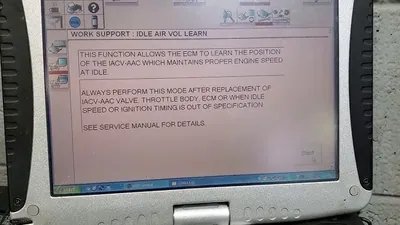
- Check for Other Codes
Use an OBD-II scanner to read all stored codes. Address codes related to the throttle position sensor (P0120-P0124, P2135) or idle air control (P0507) first, as they are often the root cause.
Tools: OBD-II Scanner (Beginner) - Check Live Data for Throttle Position
Using a scan tool, monitor the 'Absolute Throttle Position' PID with the key on, engine off. A reading significantly above 5-9% indicates the plate is stuck open due to carbon buildup or a mechanical fault.
Tools: Advanced OBD-II scan tool (Advanced) - Visually Inspect the Throttle Body
Remove the air intake hose. Look for black carbon or oily grime around the throttle plate and inside the bore. Check the electrical connector for corrosion or loose wires.
Tools: Screwdriver or socket set, flashlight (Beginner) - Clean the Throttle Body
Spray throttle body cleaner onto a rag and wipe away all carbon. Manually move the plate to clean the edges. Do not force the plate on electronic units or use harsh solvents like brake cleaner.
Tools: Throttle body cleaner, rags, soft brush (Intermediate) - Perform an Idle Relearn Procedure
After cleaning, a relearn is mandatory. Some vehicles relearn by idling for 15 minutes, others require a specific 'pedal dance' sequence, or a professional scan tool to initiate the process.
Tools: None or OBD-II scan tool with relearn function (Intermediate) - Test Throttle Position Sensor (TPS) Voltage
Check TPS voltage with the key on, engine off. At closed throttle, it reads 0.4-0.9 volts. Slowly open the throttle; voltage must increase smoothly to ~4.5 volts without jumps or dead spots.
Tools: Multimeter or advanced OBD-II scan tool (Advanced) - [PRO TIP] Check Idle Airflow Compensation
On advanced scan tools, monitor 'Throttle Body Idle Airflow Compensation'. A value above 90% indicates the PCM is commanding the throttle wide open to maintain idle, proving a dirty throttle body or vacuum leak.
Tools: Advanced OBD-II scan tool (Advanced) - [PRO TIP] Perform a Scan Tool Throttle Sweep Test
Command a 'Throttle Sweep Test' with a bi-directional scanner. If the 'TAC Motor' parameter does not display 'Enabled' or the test fails, the throttle body motor is dead.
Tools: Bi-directional scan tool (Advanced) - [PRO TIP] Analyze TPS Signal with a Lab Scope
Connect a lab scope to the TPS signal wire. Manually open and close the throttle slowly. The waveform must be a smooth line. Any sharp drop to zero indicates a dead spot in the sensor, requiring throttle body replacement.
Tools: Automotive oscilloscope (lab scope) (Professional)
When This Code Triggers (Freeze-Frame Conditions)
- Ignition Status: ON (The P2176 learn process runs once per ignition cycle when the engine is not running.)
- Engine RPM: < 40 RPM (The engine is off.)
- Vehicle Speed: 0 mph (The vehicle is stationary.)
- Engine Coolant Temp: 41-214°F (The engine can be cold or at operating temperature.)
- Ignition Voltage: > 10V (A weak battery causes the learn procedure to fail.)
Related Codes
- P0507 — P0507 means 'Idle RPM Higher Than Expected.' P2176 is the cause, and P0507 is the effect. Fix the root cause of P2176 first.
- P0121, P0122, P0123 — These point to a Throttle Position Sensor (TPS) circuit fault. The PCM cannot learn the idle position without a reliable signal from the TPS.
- P1516 — A GM-specific code for 'Throttle Actuator Control (TAC) Module Performance.' It indicates a mechanical or electrical failure in the throttle body motor.
- P2135 — Indicates a mismatch between the two position sensors within the throttle body. This strongly points to a failing throttle body assembly requiring replacement.
Climate & Environmental Factors
- Extreme Cold: In temperatures below freezing, grease within the throttle body's internal gears stiffens, preventing the motor from moving the plate correctly.
- High Altitude: Lower air density requires the throttle plate to open further for a stable idle. This exacerbates pre-existing issues like a dirty throttle body, pushing the system outside its learning parameters.
How to Talk to a Mechanic About This Code
Say this: "I have a P2176 code with a high and unstable idle. I'd like a quote to first clean the throttle body and perform the electronic idle relearn procedure before any other diagnostics are done."
This signals you know the most common and cheapest fix. It directs the shop to perform a specific, low-cost action first, preventing them from immediately quoting an expensive throttle body replacement.
Avoid saying:
- 'My check engine light is on, can you look at it?'
- 'Just fix whatever is wrong.'
- 'The internet said to replace the throttle body.'
Questions to ask before authorizing the repair:
- If cleaning doesn't work, what was the throttle position percentage on the scan tool's live data at idle?
- Did you check the throttle position sensor voltage to see if it was smooth and within spec?
- Before replacing the throttle body, can you confirm you performed the correct relearn procedure for my specific vehicle?
- What is the warranty on the proposed repair, including both parts and labor?
Where to Take It: Dealer vs Independent vs Chain
- Dealer:
Recommended for warranty work or on German makes where specific tools and software are mandatory.
Best for: Vehicles under warranty., Brands with complex, proprietary relearn procedures (e.g., Volkswagen, Audi, some Honda models)., If a PCM software update is required.
Downsides: Highest labor rates, often 1.5-2x more than independent shops., Defaults to full throttle body replacement instead of cleaning. (Typical cost: +50% vs. baseline) - Independent Shop:
Best fit for the vast majority of P2176 cases. A competent independent shop easily handles throttle body cleaning, relearns, and replacements.
Best for: Most out-of-warranty vehicles., Common domestic and Asian vehicles where the fix is well-known., Cost-conscious owners seeking good value.
Downsides: Quality varies; vet shops by reviews and ASE certifications., Lacks the latest diagnostic tools for very new or complex cars. (Typical cost: +0% vs. baseline) - Chain Shop:
Use with caution. Acceptable for a throttle body cleaning if you are clear about your instructions, but be skeptical of immediate recommendations for expensive part replacements.
Best for: Simple, clear-cut jobs like battery replacement or oil changes.
Downsides: High pressure to upsell; pushes for a full replacement when a cleaning is all that's needed., Technician skill and experience with electronic relearn procedures is inconsistent. (Typical cost: -10% vs. baseline)
When to Walk Away From the Repair
If the estimated repair cost exceeds 40-50% of the car's Kelley Blue Book (KBB) private-party value, pause and consider your alternatives.
- Car worth $4000, fix is $1100: Borderline. The repair is a significant percentage of the car's value. Get a second opinion before authorizing.
- Car worth $12000, fix is $1100: Fix it. The repair cost is well below the threshold and is a common maintenance item.
- Car worth $2500, fix is $1100: Walk away. The repair cost is too high relative to the vehicle's value. It's not economically sensible.
What Scan Tool You Need for This Code
Minimum: A scanner that reads and graphs live data, specifically 'Absolute Throttle Position' or 'Relative Throttle Position'.
A basic $20 code reader only gives you the P2176 code. It cannot show the live data needed to know *why* it failed to learn. Seeing a throttle position of 15% at idle tells you the plate is stuck open, while seeing erratic voltage points to a bad sensor.
Budget: BlueDriver Pro (~$90) — Connects to your smartphone and provides detailed code explanations, freeze frame data, and live data graphing to monitor throttle position.
Mid-range: Foxwell NT510 Elite / Autel MaxiCOM MK808 (~$180-390) — Offers bi-directional control. This allows you to command a 'Throttle Body Relearn' or 'Throttle Adaptation' directly from the tool, which is the fastest and most reliable way to fix the code after a cleaning.
Professional: Launch X431 CRP919XBT / Autel MS906 Pro (~$500-1200) — Provides full, OEM-level bidirectional controls for all vehicle systems, including advanced throttle diagnostics and sweep tests to diagnose complex wiring or module faults.
Rent vs buy: If this is a one-time fix, auto parts stores like AutoZone have a free tool loaner program for basic scanners. If your car requires a specific relearn function, buying a mid-range tool is a better investment than paying for a single diagnostic session at a shop.
How to Clear the Code After You Fix It
- Reconnect the battery if it was disconnected.
- Use an OBD-II scan tool to clear all diagnostic trouble codes.
- Perform the vehicle-specific Idle Relearn Procedure using a scan tool or manual 'pedal dance'.
- Perform a complete drive cycle to allow all readiness monitors to run.
Drive cycle (~20 minutes): Cold start the engine and let it idle for 2-3 minutes. Drive in mixed city/highway conditions for 15-20 minutes, including steady-state cruising and stop-and-go traffic. Allow the vehicle to cool down completely.
Readiness monitors affected: Catalyst (CAT) monitor, Evaporative System (EVAP) monitor, Oxygen (O2) Sensor monitor
Before emissions retest: drive at least 50 miles to fully set monitors.
Watch out for:
- Clearing the code without performing the idle relearn procedure causes the code to return instantly.
- Attempting an emissions test before the readiness monitors are set to 'Ready' results in an automatic failure.
Will This Fail Emissions / State Inspection?
Yes — this code typically fails an OBD-II emissions inspection.
- California: An active P2176 code causes an immediate smog check failure. After repair, a full drive cycle must be completed to set all readiness monitors before a re-test.
- New York: The NYS vehicle inspection includes an OBD-II scan. The presence of a Check Engine Light for code P2176 is an automatic failure.
- Texas: In counties requiring emissions testing, a vehicle with P2176 fails the OBD-II portion of the inspection.
Most Commonly Affected Vehicles
- Chevrolet Cruze, HHR, Enclave, Corvette, Express (2005-2018) — Prone to carbon buildup and throttle body electronic failures, displaying a 'Reduced Engine Power' message.
- GMC Canyon, Acadia, Terrain (2004-2015) — Frequently sets P2176 due to a dirty throttle body or internal electronic faults.
- Ford Focus, Fusion, F-150 (2011-2017) — Commonly triggered after a battery replacement. The PCM loses its Keep Alive Memory (KAM) and requires a specific relearn procedure.
- Honda CR-V, Accord, Civic, HRV (2006-2023) — Occurs after a dead battery or dirty throttle body. A specific relearn procedure using a diagnostic tool like the Honda HDS is mandatory.
- Hyundai Elantra, Sonata (2011-2018) — Highly sensitive to carbon buildup and requires a scan tool to perform the throttle relearn procedure successfully after cleaning.
- Subaru Outback, Forester, Impreza (2010-2017) — Triggered by a battery change or dirty throttle body. A scan tool is more reliable than manual relearn methods.
- Volkswagen Jetta, Golf (2009-2016) — Almost always requires a scan tool (like VCDS) to perform the 'Throttle Body Adaptation' (TBA); manual relearns are ineffective.
- Nissan/Infiniti Various (2005-2015) — Strictly requires a complex, multi-step 'pedal dance' or a scan tool to complete the Idle Air Volume Learning procedure.
Manufacturer-Specific Notes
- General Motors (Chevy, GMC, Buick): Displays a 'Reduced Engine Power' message. The ECM requires specific voltage ranges from the dual TPS sensors after a learn, setting the code if it fails.
- Ford: Appears after battery disconnection. The PCM loses its Keep Alive Memory (KAM) and requires a multi-step relearn procedure.
- Volkswagen/Audi: Requires a diagnostic scan tool (like VCDS) to perform the 'Throttle Body Adaptation' in the Engine control module's Basic Settings.
- Honda: Requires a scan tool to clear the code and perform the idle learn procedure. If DTC P2135 is present, it must be fixed before addressing P2176.
Real Owner Stories
2011 Buick Enclave - The Classic Dirty Throttle Body Fix
Check Engine Light came on with code P2176. Erasing the code resulted in it coming back immediately on the next key cycle.
What they tried:
- Attempted an idle relearn procedure with a professional scan tool, but the code returned instantly.
- Checked live data and saw throttle position at 16% at idle, far above the expected 3-5%.
- Visually inspected the throttle body and found it extremely dirty with oil and carbon.
Outcome: The owner cleaned the throttle body thoroughly with a rag, cleared the codes, and performed the idle relearn procedure again. The fix was successful, and the code did not return.
Lesson: Even if a code returns immediately and seems electrical, don't overlook the most common cause. A throttle plate physically stuck open by 10% due to carbon buildup always fails the 'minimum position' check.
2015 Chevy Cruze LTZ - The Misleading Battery Problem
Car suddenly went into 'Reduced Engine Power' mode, would only move at ~5 mph, and showed a P2176 code. The battery voltage was very low.
What they tried:
- Disconnected the negative battery cable for a minute, which temporarily restored normal operation.
- Replaced the original, aging battery.
Outcome: After replacing the dying battery, the P2176 code and 'Reduced Engine Power' issue did not return. The low voltage prevented the electronic throttle control system from operating correctly.
Lesson: A weak battery causes a host of seemingly unrelated electronic issues. Before diving into complex throttle body diagnostics, ensure your battery voltage is stable and above 12.4V with the engine off.
2004 Ford Fiesta - A Confusing Combination of Issues
Car stalled at idle and displayed an 'EAC Fail' message on the dash, with a stored P2176 freeze frame code.
What they tried:
- Found and repaired a split vacuum hose, but the car still stalled after revving.
- Replaced the throttle body with a used unit and replaced the fuel pressure regulator, but the problem persisted.
- Disconnected the battery for 30 minutes to reset the Keep Alive Memory (KAM) to force a relearn.
Outcome: Even after fixing the vacuum leak, the PCM's learned adaptations were so far off that it could not idle properly until the memory was fully reset.
Lesson: Multiple faults can exist at once. Fix the most obvious faults (like a split hose) first, then reset the PCM's memory by disconnecting the battery for 30 minutes before attempting a relearn.
How to Prevent This Code From Triggering
- Clean the throttle body periodically (Every 50,000 to 75,000 miles) — Prevents the gradual buildup of carbon and oil from the PCV system that physically blocks the throttle plate from closing, which is the number one cause of P2176.
- Use Top Tier gasoline (Every fill-up) — High-quality fuels contain enhanced detergent packages that reduce carbon deposit formation throughout the fuel system and intake.
- Maintain the PCV system (Per manufacturer schedule (often 60k-100k miles)) — A clogged PCV valve increases crankcase pressure, forcing more oil vapor into the intake tract, which accelerates carbon buildup on the throttle plate.
- Test battery health annually (Once per year, especially for batteries over 3 years old) — The electronic throttle body and its learning procedure are sensitive to low voltage. A weak battery causes the relearn process to fail and triggers P2176.
- Add a fuel system cleaner to the gas tank (Every 5,000-10,000 miles) — Using a quality fuel system cleaner removes deposits and maintains the cleanliness of the entire intake system, slowing the rate of throttle body contamination.
Frequently Asked Questions
Can I fix P2176 myself?
Yes. The most common fix is cleaning the throttle body and performing a relearn procedure, which is highly DIY-friendly. You need basic hand tools, throttle body cleaner, and the correct relearn procedure for your car.
What is a throttle body relearn?
It teaches the car's computer the new fully closed position of the throttle plate after cleaning, replacement, or memory erasure. This allows the computer to control the idle speed correctly. The procedure varies significantly by vehicle.
Why did this code appear right after I cleaned my throttle body?
Before cleaning, the computer learned to hold the throttle plate slightly open to compensate for carbon buildup. After cleaning, that same learned position lets in too much air, causing a high idle and triggering P2176. Performing a vehicle-specific idle relearn procedure fixes this.
Why did this code appear right after I replaced my battery?
Disconnecting the battery erases the PCM's short-term memory, which includes the learned idle position of the throttle. After reconnecting power, the PCM attempts to relearn this position. If the procedure fails due to a dirty throttle body or low voltage, it sets P2176.
What is the most common misdiagnosis for P2176?
Replacing the entire throttle body assembly ($300-$800) when a simple cleaning and relearn procedure ($15 in supplies) fixes the issue. Another pitfall is replacing the PCM when the issue is a weak battery.
What is the difference between P2176 and P0507?
P2176 ('Idle Position Not Learned') is the cause, meaning the computer failed its setup process. P0507 ('Idle RPM Higher Than Expected') is the symptom, meaning the failure to learn properly resulted in a high idle. Always diagnose P2176 first.
Can a vacuum leak cause P2176?
Yes. A large vacuum leak introduces unmetered air, raising the idle speed so much that the PCM cannot find a stable point to learn the throttle's closed position.
Will clearing the code fix the problem?
No. If the underlying issue is not resolved, the computer fails the learning process on the next drive cycle and the code returns immediately.
How much does it cost to fix P2176?
A DIY cleaning costs $15, while a professional cleaning and relearn costs $150-$200. Replacing the entire throttle body assembly ranges from $300 to $800. A PCM software update at a dealer costs $150-$250.
Key Takeaways
- Cleaning the throttle body and performing an electronic idle relearn fixes P2176 in over 70% of cases.
- Disconnecting the battery or cleaning the throttle body erases the engine computer's memory, triggering this code until a relearn is completed.
- Driving with P2176 is unsafe because the engine stalls unexpectedly at stops or idles excessively high, causing harsh transmission shifts.
- Never replace a $400 throttle body without first spending $15 on cleaner and completing the mandatory 15-minute idle relearn procedure.
Helpful Videos

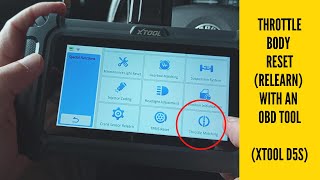
Shop the Parts Behind P2176
Below are the parts most often responsible for code P2176, ranked by how frequently each one is the actual culprit (per the diagnosis above). Tap any to see what we have for your vehicle.



The information in this article is provided for general reference and educational purposes only. Vehicle specifications, procedures, and part compatibility can vary by production date, trim level, and region. Always consult your vehicle's factory service manual and verify part numbers before purchasing or performing repairs. Safety-critical components such as airbags, seat belts, and braking systems should be installed by a qualified professional.
- 🧭 Diagnostic Flowchart
- 🎬 Helpful Videos
- 🛍️ Shop This Part
- What Does P2176 Mean?
- Can I Drive With P2176?
- Common Causes
- Symptoms
- Common Fixes & Costs
- DIY vs Professional
- Used vs. New Parts: Buying Guide
- What Happens If You Wait — Timeline
- Cost of Not Fixing It
- Diagnosis Steps
- When This Code Triggers (Freeze-Frame Conditions)
- Related Codes
- Climate & Environmental Factors
- How to Talk to a Mechanic About This Code
- Where to Take It: Dealer vs Independent vs Chain
- When to Walk Away From the Repair
- What Scan Tool You Need for This Code
- How to Clear the Code After You Fix It
- Will This Fail Emissions / State Inspection?
- Most Commonly Affected Vehicles
- Manufacturer-Specific Notes
- Real Owner Stories
- 2011 Buick Enclave - The Classic Dirty Throttle Body Fix
- 2015 Chevy Cruze LTZ - The Misleading Battery Problem
- 2004 Ford Fiesta - A Confusing Combination of Issues
- How to Prevent This Code From Triggering
- Frequently Asked Questions
- Can I fix P2176 myself?
- What is a throttle body relearn?
- Why did this code appear right after I cleaned my throttle body?
- Why did this code appear right after I replaced my battery?
- What is the most common misdiagnosis for P2176?
- What is the difference between P2176 and P0507?
- Can a vacuum leak cause P2176?
- Will clearing the code fix the problem?
- How much does it cost to fix P2176?
- Key Takeaways