

P0420 on 2011-2018 Subaru Forester 2.5L: Causes for Catalyst Efficiency Code
On a 2011-2018 Forester, P0420 most often means the front catalytic converter is failing, a costly repair. However, always check for cheaper fixes first, like exhaust leaks or a faulty rear oxygen sensor, as these can mimic a bad converter. Early models (2011-2014) are prone to oil burning which destroys the converter, so this root cause must be considered.
- Do not immediately assume you need a new catalytic converter. Thoroughly check for exhaust leaks and test the oxygen sensors first.
- On 2011-2014 models, check your oil level frequently. High oil consumption is a known issue and the likely root cause of catalytic converter failure.
- If you must replace the converter, use a high-quality OEM or CARB-compliant part. Cheap aftermarket converters often fail to resolve the P0420 code on Subarus.
- Always address underlying issues like misfires, fuel mixture problems, or oil burning BEFORE installing a new catalytic converter, or the new part will fail prematurely.
- Check with a Subaru dealer for any available ECM software updates, as this can sometimes resolve the issue.
What's Unique About the 2011-2018 Subaru Forester
The P0420 code is notoriously common on Subarus, often nicknamed 'The Subaru Code'. This is partly due to the boxer engine's design and specific vulnerabilities of the FB25 engine used in this generation of Forester. Early models in this range (approx. 2011-2014) were known for excessive oil consumption due to defective piston rings that failed to properly scrape oil from the cylinder walls. This burning oil contaminates and destroys the precious metals in the catalytic converter over time. A class-action lawsuit (Yaegar v. Subaru of America, Inc.) addressed this, resulting in an extended warranty (8 years/100,000 miles) and reimbursements for some owners. Because of these known issues, it's critical to investigate underlying problems like oil burning before replacing the expensive catalytic converter.
🎬 See why diagnosing first prevents a common $1500 mistake.Generation note: This range covers two Forester generations: the end of the 3rd Gen (SH; 2011-2013) and the 4th Gen (SJ; 2014-2018). Both used versions of the 2.5L FB25 engine. The primary difference is that the earlier FB25 engines (2011-2014) are more known for the oil consumption issue due to piston ring design, which often leads to P0420. Subaru later revised the piston rings to mitigate the problem.
Symptoms You May Notice
- Check Engine Light is on (often accompanied by a flashing cruise control light and a solid traction control light, a common Subaru trait).
- Reduced fuel economy.
- Sluggish acceleration or loss of power, especially if the converter is clogged.
- A rotten egg or sulfur smell from the exhaust, indicating the converter is not processing sulfur correctly.
- Rattling noises from underneath the vehicle if the converter's internal ceramic honeycomb has broken apart.
- Automatic failure of a state emissions test.
- Immediately replacing the catalytic converter without diagnosing other potential causes. An exhaust leak or a bad O2 sensor are much cheaper repairs and common causes.
- Replacing only the oxygen sensors when the catalytic converter is truly bad. While O2 sensors can be the cause, if the converter is contaminated or worn out, the code will return.
- Using a cheap, universal aftermarket catalytic converter. Subaru's ECU is very sensitive, and these often don't have sufficient precious metal loading to perform well enough to keep the P0420 code from returning.
- Installing an 'O2 sensor spacer' or 'defouler'. This is a small mechanical extension that pulls the rear O2 sensor out of the direct exhaust stream to trick it into sending a stable signal. While it may turn off the light, it does not fix the underlying problem and is illegal for emissions purposes.
Most Likely Causes
- Failing Catalytic Converter 🔴 High Probability → Shop Catalytic Converter Often a secondary failure caused by known issues like oil consumption on early FB25 engines, which contaminates the catalyst materials. High mileage and the boxer engine's tendency to run rich can also contribute to wear.
How to confirm: After confirming sensors and exhaust are good, use a scan tool to graph O2 sensor data. A rear O2 sensor voltage that mimics the front A/F sensor's pattern indicates a bad converter. An infrared thermometer can also be used; the outlet should be at least 100°F hotter than the inlet on a fully warmed-up, working converter.
Typical fix: Replace the front catalytic converter assembly. 🎬 Watch: Step-by-step guide to replacing your Forester's catalytic converter. Using an OEM or high-quality CARB-compliant aftermarket converter is strongly recommended, as cheap converters have less precious metal loading and often fail quickly or don't satisfy Subaru's sensitive ECM.
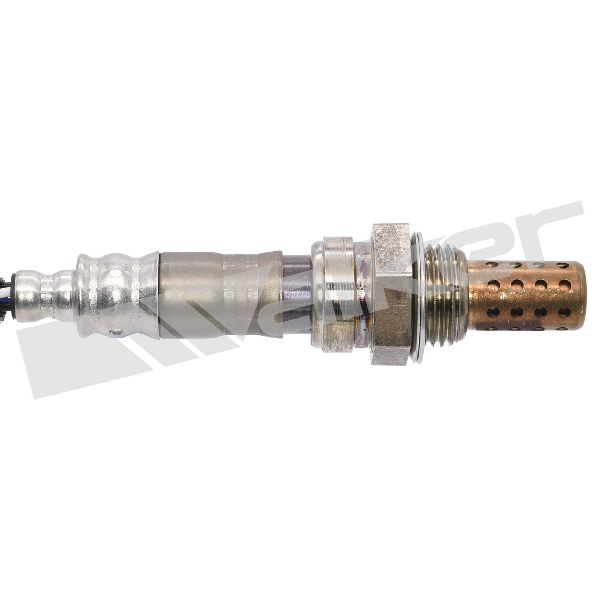
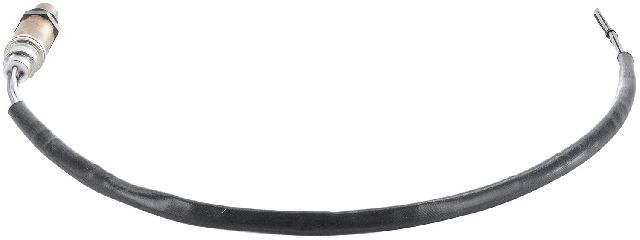
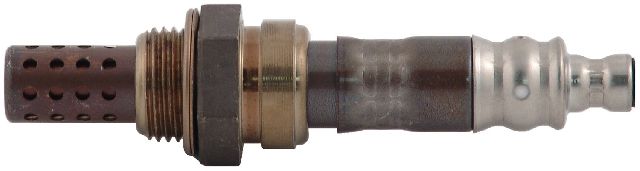
Est. part cost: $800-$2000 - Faulty Rear (Downstream) Oxygen Sensor 🟡 Medium Probability → Shop Oxygen Sensor The sensor can become 'lazy' or biased with age and contamination, sending incorrect data to the ECM and falsely triggering a P0420 code. Many owners replace this as a first, cheaper step.
How to confirm: Graph the sensor's voltage with a scan tool. At a steady cruising speed (around 2500 RPM), the voltage should be relatively stable and high (e.g., >0.6V). If it's stuck, or fluctuating rapidly like the front sensor without a confirmed bad converter, the sensor is likely faulty.
Typical fix: Replace the rear oxygen sensor. It is highly recommended to use an OEM or Denso brand sensor to avoid compatibility issues.
Est. part cost: $80-$180 - Exhaust System Leak 🟡 Medium Probability Gaskets, especially the donut gasket between the manifold and mid-pipe, can fail over time. Rust can also create leaks in the pipes or flex joint. A leak between the two O2 sensors allows oxygen to enter, fooling the rear sensor.
How to confirm: Perform a visual inspection for soot trails or cracks. A simple and effective method is to use a shop vacuum on its 'blow' setting, stick the hose in the tailpipe, and spray soapy water on all exhaust joints and welds; bubbles will reveal the leak.
Typical fix: Replace the leaking gasket or repair the leaking section of pipe. This is a much cheaper fix and should always be checked before replacing expensive components.
Est. part cost: $20-$100 - Faulty Front Air/Fuel (A/F) Ratio Sensor ⚪ Low Probability → Shop Oxygen Sensor A slow or inaccurate front A/F sensor can cause an improper air/fuel mixture. This can lead to long-term damage to the catalytic converter and eventually trigger a P0420 code.
How to confirm: Graph the sensor's response on a scan tool. It should react very quickly to throttle changes. A slow or 'lazy' response indicates a problem.
Typical fix: Replace the front A/F ratio sensor. Like the rear sensor, using an OEM or Denso/NGK brand part is recommended for reliability.
Est. part cost: $100-$250
Rare But Worth Checking
- Engine Oil Consumption: This is a root cause, not a direct trigger. Excessive oil burning (a known issue on 2011-2014 FB25s due to piston ring design) contaminates the catalytic converter with phosphorus and zinc, causing it to fail and throw a P0420 code. If you have high oil consumption, you must address it or any new converter will fail again.
- Outdated ECM Software: Subaru has issued service bulletins and campaigns to reprogram the ECM with updated logic for managing the catalytic converter and the sensitivity of the P0420 code. It's worth checking with a dealer if your VIN has any open campaigns or available updates, as this can sometimes be a no-cost fix.
- Engine Misfires or Fuel Trim Issues: Unaddressed misfires or rich/lean running conditions (codes like P030x, P0171, P0172) will dump raw fuel or create excessive heat in the exhaust, quickly destroying the catalytic converter. These codes must be diagnosed and fixed before addressing the P0420.
Diagnosis Steps
- Check for any other stored DTCs. Address any misfire, fuel trim, or other sensor codes FIRST, as they are often the root cause.
- Perform a thorough visual and auditory inspection of the exhaust system from the engine to the rear O2 sensor. Look for cracks, rust, and black soot marks indicating a leak, especially around gaskets. Use the shop-vac method to confirm. 🎬 Watch: How to perform this exhaust leak test and diagnosis.
- If you have a scan tool with live data, graph the front A/F sensor and the rear O2 sensor. At a steady 2500 RPM on a warm engine, the front sensor should show rapid switching. The rear sensor should show a slow, relatively flat voltage, ideally above 0.6V. If the rear sensor is mirroring the front sensor's activity, the converter is likely inefficient.
- Check for known TSBs or ECM software updates for your vehicle's VIN with a Subaru dealer.
- Test the catalytic converter with an infrared thermometer. After a 20-minute drive, the outlet temperature should be significantly hotter (at least 100°F) than the inlet temperature. If it's the same or cooler, the converter is not working or is clogged.
- If oil consumption is high (e.g., more than 1 quart per 1,200 miles), understand that this is likely the root cause of converter failure and must be addressed.
- If all other tests pass, the catalytic converter is the most likely culprit.
Parts You'll Likely Need
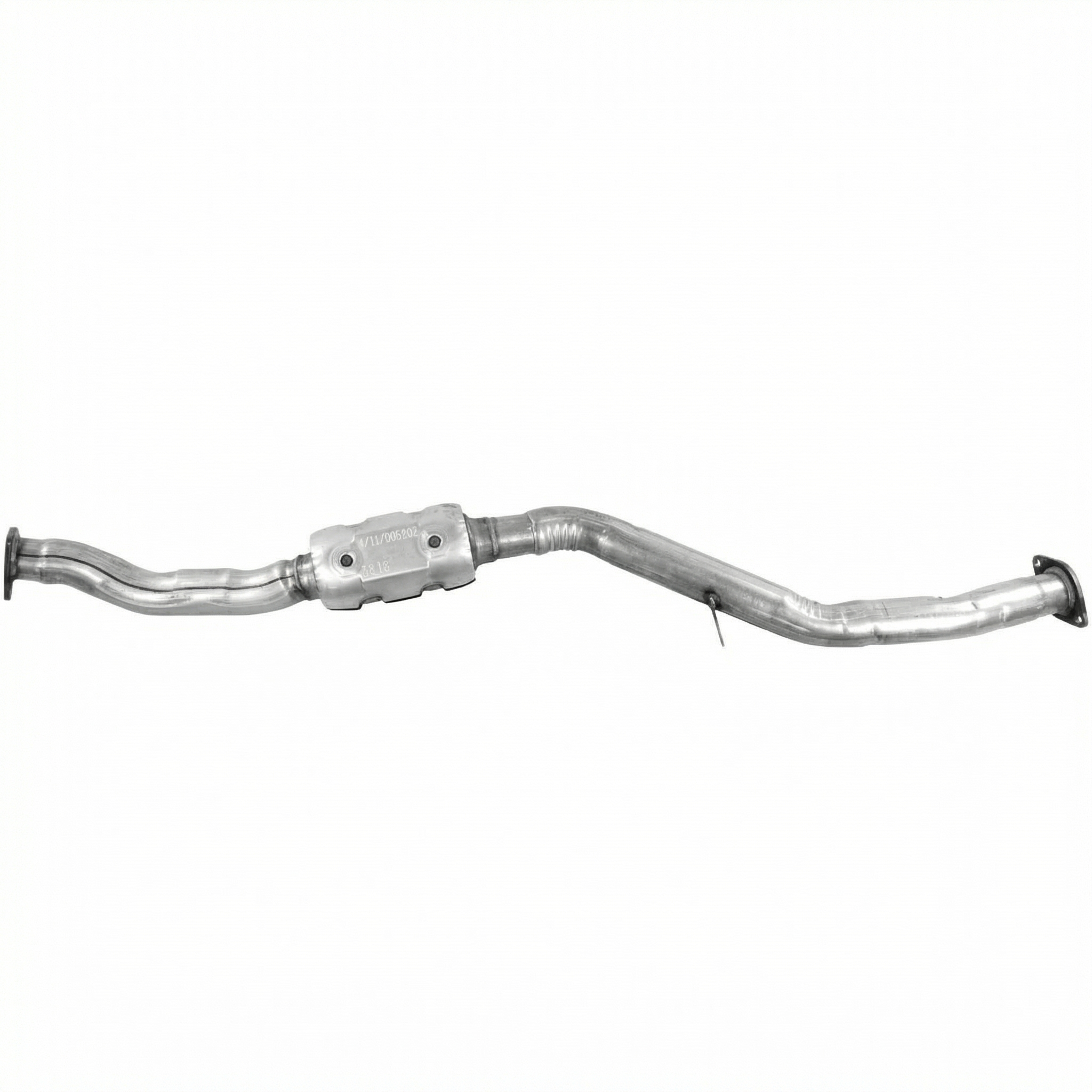
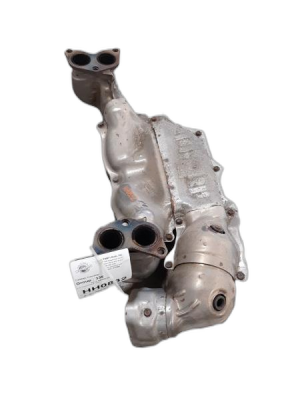
- Front Catalytic Converter / Manifold Assembly
(OEM #44620AC590 (Federal Emissions), 44620AD510 (California Emissions))— This is the most common failure point that directly causes the P0420 code on this vehicle, often due to contamination from oil consumption or simple high-mileage wear. - Rear (Downstream) Oxygen Sensor
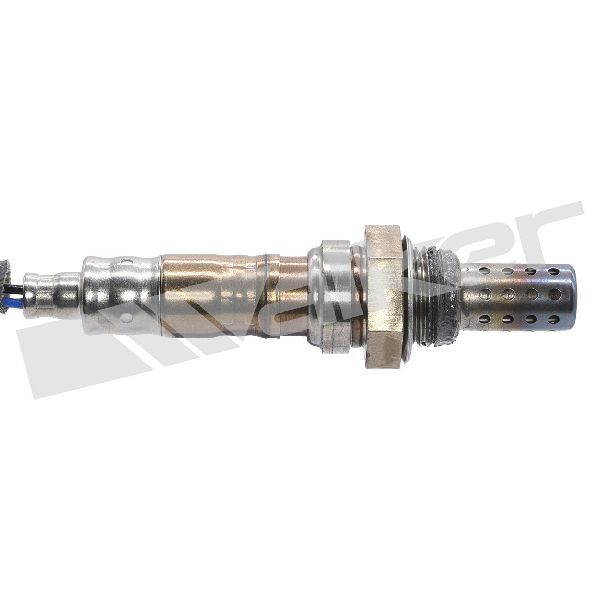
(OEM #22690AA960 (OEM), Denso 234-4513 (Aftermarket equivalent))— Often fails with age or contamination, sending faulty data that mimics a bad converter. A common first part to replace due to lower cost. - Front (Upstream) Air/Fuel Ratio Sensor
(OEM #22641AA670 (OEM), Denso 234-9123 (Aftermarket equivalent))— A lazy front sensor can cause incorrect fuel mixtures that damage the converter over time. Replacing it can be a preventative measure or a fix if it's the root cause. - Exhaust Gaskets — Donut gaskets and flange gaskets between exhaust components are common leak points that can trigger a false P0420 code.
Related Codes That Often Appear With This One
- P0171 — System Too Lean. An engine running lean can increase combustion temperatures, potentially damaging the catalytic converter over time. It can also be caused by an exhaust leak, which is also a direct cause of P0420.
- P0172 — System Too Rich. A rich condition sends unburnt fuel into the exhaust, which can overheat and melt the internal structure of the catalytic converter.
- P0300-P0304 — Misfire codes. A misfiring cylinder allows unburnt fuel to enter the exhaust, which will quickly overheat and destroy the catalytic converter.
Technical Service Bulletins (TSBs) & Recalls
- Diagnostic Service Procedures for DTC P0420: Subaru issued a bulletin outlining the official diagnostic steps to follow when a P0420 code is detected, emphasizing a structured approach rather than immediate converter replacement.
- Bulletin #09-110-23R: This Service Information Bulletin announces diagnostic service procedures to be followed when DTC P0420 (Catalyst System Efficiency Below Threshold Bank 1) is detected by the Engine Control Module (ECM).
- Engine Control Module (ECM) Reprogramming: While for an earlier generation, this campaign shows Subaru's history of addressing P0420 sensitivity. It involved reprogramming the ECM with updated logic to better manage the catalytic converter under severe driving, preventing premature degradation warnings. It's worth checking for similar updates on the 2011-2018 models.
- Warranty Extension for Excessive Oil Consumption: Not a TSB, but a critical legal action. The settlement extended the powertrain warranty to 8 years/100,000 miles for affected vehicles to cover repairs related to excessive oil consumption, the root cause of many P0420 failures. It also reimbursed owners for oil and some repairs.
Platform-Specific Known Issues
- Excessive oil consumption on early FB25 engines (2011-2014) due to piston ring design is a well-documented cause of premature catalytic converter failure.
- Subaru issued TSB 09-110-23R which outlines a specific diagnostic procedure for P0420, emphasizing checking for other codes and oil/coolant burning before condemning the converter.
- The federal emissions warranty covers the catalytic converter for 8 years or 80,000 miles. Some states like California have stricter/longer coverage.
Mechanic-Grade Diagnostic Values
- Rear O2 Sensor Heater Resistance — expected: 5 to 8 ohms. Failure: A very high reading (over 50 ohms) or no reading (open circuit) indicates a failed heater element within the sensor.
- Front A/F Sensor Heater Resistance (2015 model year example) — expected: 2 to 3 ohms (across the two black wires). Failure: A reading well above this specification indicates a faulty heater circuit in the A/F sensor.
- Mode $06 Catalyst Monitor Test (TID $01, CID $01) — expected: Value should be below the maximum threshold specified by the ECM.. Failure: If the test value reported by the scan tool exceeds the specified maximum limit, it indicates the catalyst failed the last efficiency test performed by the ECM.
Scan Tool Commands That Help
- Subaru Select Monitor (SSM) or equivalent pro-level scanner: Catalyst Diagnosis / Test of Catalyst — This function, found under the OBD System menu, shows whether the catalyst monitor test has completed ('Complete' or 'Incomplete'). This is crucial for verifying if the conditions have been met to even test the catalyst's efficiency after a repair or clearing codes.
- Subaru Select Monitor (SSM) or equivalent pro-level scanner: Subaru Drive Cycle Procedure — After a repair like replacing a sensor or catalytic converter, the internal readiness monitors must be reset. A specific drive cycle is required to run the catalyst monitor. This typically involves driving for 15 minutes at speeds over 50 mph after a 10+ hour cold soak with the fuel tank 3/4 full. This procedure forces the ECM to re-evaluate the catalyst's performance.
Wiring & Ground Locations
- Engine Ground Strap — A key ground strap runs from the cylinder head to the front chassis rail.. These tinned copper straps are known to corrode and degrade over time. A poor ground connection can cause erratic voltage signals from engine sensors, including the A/F and O2 sensors, potentially leading to an incorrect P0420 diagnosis.
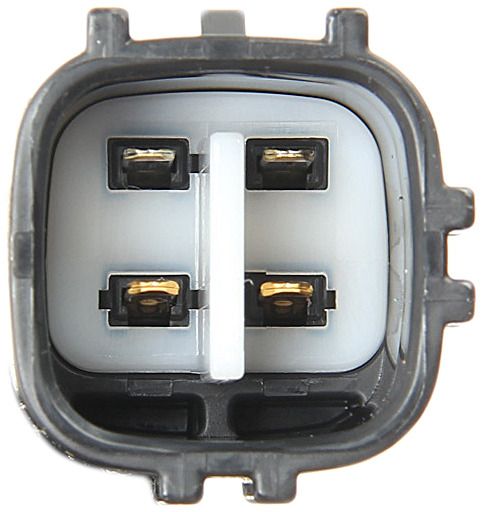
- Rear O2 Sensor Connector (example for 1997, similar principles apply) — The chassis-side harness for the rear O2 sensor on many Subarus has a square, 4-pin connector. The wires are typically for the heater power, heater ground, and sensor signal.. If the harness is damaged, knowing the pinout is critical. For example, on one model, Pin 1 (White/Blue) and Pin 2 (Yellow/Red) are for the heater, while Pin 4 (Black) is the signal wire. Incorrectly wiring this after a repair can cause sensor codes or a false P0420.
- Main ECU Ground — The primary ground point for the ECU is often located on top of the intake manifold.. All sensor readings are interpreted relative to the ECU's ground reference. If this point is corroded or loose, it can disrupt the sensitive low-voltage signals from the O2 sensors, leading to a variety of codes, including P0420.
Real Owner Repair Stories
- thesubaruforums.com user 'dzubot' (2015 Forester XT) — Persistent P0420 code. Oddly, the check engine light would often trigger when braking after a period of cruising.
❌ Tried (didn't work) Replacing the catalytic converter with an OEM part, Replacing the front A/F sensor with an OEM part, Replacing the rear O2 sensor with an OEM part, Replacing the PCV valve, Replacing spark plugs
✅ What actually fixed it After approximately $4,000 in parts and labor with no success, the issue was finally traced to a software problem. An ECM reflash/update resolved the code. - YouTube channel 'Valley Mobile Automotive' (2008 Subaru Outback 2.5L (demonstrates a common Subaru issue)) — P0420 code returned after replacing the original catalytic converter with an aftermarket one.
❌ Tried (didn't work) Replacing the catalytic converter with a non-OEM, aftermarket unit.
✅ What actually fixed it Scan tool data showed the aftermarket converter was inefficient at cruise RPM (around 2000). Replacing the aftermarket converter with a genuine Subaru OEM catalytic converter and new OEM gaskets permanently fixed the P0420 code. - YouTube channel 'Subaru P0420' (2014 Subaru Outback 2.5L) — P0420 code returned after a tune-up and replacing both O2 sensors.
❌ Tried (didn't work) Replacing spark plugs, Replacing PCV valve, Replacing front and rear O2 sensors
✅ What actually fixed it Upon physical inspection, the front catalytic converter's internal honeycomb structure was found to be cracked and breaking apart. Replacing both the front and rear catalytic converters (due to the vehicle's high mileage of 156,000) was the final solution. - NHTSA ODI #11628507 — An owner reported that the check engine light illuminated intermittently for over a month. A dealer retrieved code P0420 and diagnosed the vehicle with catalytic converter failure.
"I Checked Everything" — The Actual Cause
- A cracked exhaust manifold can be the source of an exhaust leak that causes P0420. This type of leak can be difficult to detect with a smoke test and may not be visually obvious without removing heat shields. The crack allows air to be pulled in, disrupting the A/F sensor reading and leading the ECM to set a P0420 code, even if the catalytic converter and O2 sensors are perfectly fine.
OEM Part Supersession History
44620AD510 (Example for 2014-2018 Forester)→N/A - This is a current part number.— N/A
Heads up: The primary incompatibility comes from using non-OEM parts. Aftermarket converters, even if they physically fit, often lack the specific precious metal loading that the sensitive Subaru ECM requires to satisfy the catalyst efficiency monitor, leading to a swift return of the P0420 code.
Model Year Variations Within This Range
- 2011-2014: These earlier FB25 engines are widely known for potential high oil consumption due to piston ring design. This is a primary root cause for premature catalytic converter failure and recurring P0420 codes in this specific year range.
- 2011-2013 (SH Chassis) vs. 2014-2018 (SJ Chassis): While both use the FB25 engine, there are differences in chassis and potentially in exhaust component part numbers and routing. The engine itself was revised after ~2014 to address oil consumption. Always verify part numbers with a VIN.
- 2017+: Later model years within this range may have updated ECM software from the factory with different logic for the catalyst monitor compared to the earliest models. A dealer can check for available software updates for a specific VIN.
Diagnostic Flowchart
Real Owner Stories
Aggregated from forums and TSBs cited above. Mileages and costs reflect what owners reported in those sources.
Subaru Forester
Symptoms: Experienced the classic Subaru 'rainbow of death' with the Check Engine Light, a flashing cruise control light, and a solid traction control light.
What fixed it: Replaced sensors and a dirty air filter, proving the issue was not the catalytic converter itself.
Source hint: Reddit r/SubaruForester - HELP: Code P0420
Subaru
Symptoms: Dealt with a persistent P0420 code that was frequently misdiagnosed as a bad catalytic converter.
What fixed it: Addressed a lazy front A/F sensor, fixed minor intake leaks, and improved fuel quality.
Source hint: Reddit r/subaru - My Subarus are making me actually pull my hair out p0420
Subaru
Symptoms: Triggered a P0420 code and experienced repeated failures after trying to save money with cheap aftermarket catalytic converters.
What fixed it: Installed a high-quality OEM catalytic converter to satisfy the sensitive ECM.
Source hint: Reddit r/subaru - Has anyone ever truly fixed their P0420 code?
Related OBD-II Codes
Frequently Asked Questions
Is my 2011-2014 Forester's oil consumption related to the P0420 code?
What does the 'rainbow of death' (flashing cruise control and solid traction control) mean with my check engine light?
Does TSB 09-110-23R mean I need a new catalytic converter?
Will the Yaegar v. Subaru class action settlement cover my P0420 repair?
Can I use a cheap aftermarket catalytic converter on my Forester?
Are there any ECM updates for the P0420 code on my Forester?
Helpful Videos
Used OEM Parts in Stock
New Aftermarket Parts Available


The information in this article is provided for general reference and educational purposes only. Vehicle specifications, procedures, and part compatibility can vary by production date, trim level, and region. Always consult your vehicle's factory service manual and verify part numbers before purchasing or performing repairs. Safety-critical components such as airbags, seat belts, and braking systems should be installed by a qualified professional.
- Subaru Forester:
- 🧭 Diagnostic Flowchart
- 🎬 Helpful Videos
- 🛍️ Shop This Part
- What's Unique About the 2011-2018 Subaru Forester
- Symptoms You May Notice
- Most Likely Causes
- Rare But Worth Checking
- Diagnosis Steps
- Parts You'll Likely Need
- Related Codes That Often Appear With This One
- Technical Service Bulletins (TSBs) & Recalls
- Platform-Specific Known Issues
- Mechanic-Grade Diagnostic Values
- Scan Tool Commands That Help
- Wiring & Ground Locations
- Real Owner Repair Stories
- "I Checked Everything" — The Actual Cause
- OEM Part Supersession History
- Model Year Variations Within This Range
- Real Owner Stories
- Subaru Forester
- Subaru
- Subaru
- Related OBD-II Codes
- Frequently Asked Questions